Bianca Schmitt · 11 September 2026
Navigating Seasonal Traffic Patterns in Emerging Digital Platforms Beyond Standard Optimization Tactics
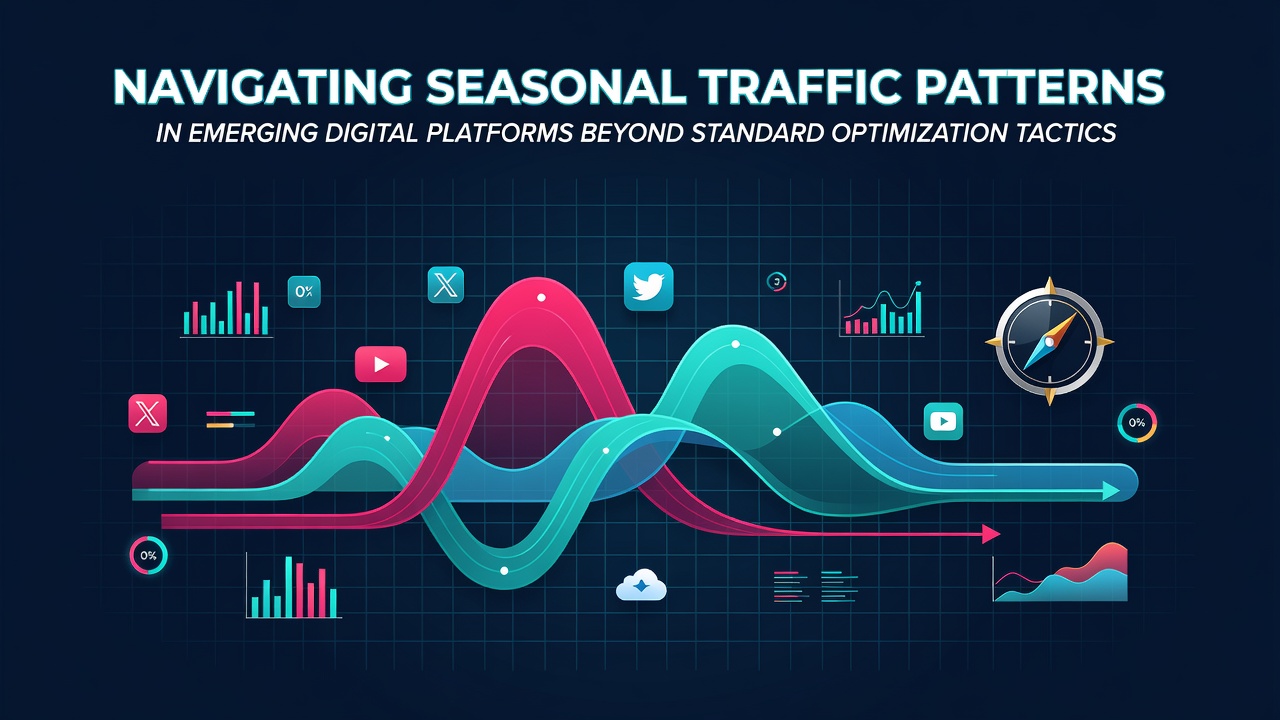
Seasonal traffic patterns in emerging digital platforms follow predictable cycles tied to holidays, cultural events, and regional calendars, yet many operators rely solely on conventional search optimization when these platforms demand more adaptive approaches, and data from multiple studies shows that platforms such as decentralized social networks and AI-driven content hubs experience traffic spikes of 40 to 70 percent during peak periods like back-to-school seasons or major product launches.
Recognizing Cyclical Shifts in Newer Platforms
Emerging platforms often lack the mature analytics infrastructure of established networks, which means traffic data arrives in fragmented streams that require cross-referencing with external calendars; researchers at institutions in North America and Europe have documented how September typically marks a surge in educational technology platforms as academic terms begin, while December drives e-commerce integrations in metaverse environments, and these patterns repeat annually with measurable consistency according to aggregated user metrics.
Platforms built on blockchain or augmented reality layers encounter additional variables because user engagement depends on real-time events such as virtual festivals or token drops that align with physical-world holidays, and observers note that failure to synchronize these moments leads to missed opportunities where traffic plateaus instead of climbing, whereas coordinated timing produces sustained growth across multiple quarters.
Data Patterns from Recent Platform Analyses
Figures released by the Pew Research Center indicate that mobile-first emerging platforms see higher variance in daily active users during transition months, with September 2026 projected to mirror prior years as students and professionals return to structured routines that favor short-form video and collaborative tools, and this creates windows for content creators who adjust posting schedules rather than relying on static keyword strategies alone.
Additional reports compiled across the European Union highlight similar trends in platforms focused on immersive experiences, where traffic doubles during cultural events such as harvest festivals or winter markets, and these spikes occur because users migrate from legacy social networks toward newer environments that offer novel interaction formats, yet the underlying seasonal drivers remain tied to offline calendars.
Strategies That Extend Past Conventional Optimization
Standard optimization focuses on search rankings and backlink profiles, but emerging platforms reward dynamic elements such as API-driven content syndication and community governance models that respond to real-time sentiment shifts; teams managing these environments often integrate calendar APIs directly into content management systems so that promotional assets activate automatically when external signals indicate rising interest, and this automation reduces manual intervention while capturing traffic that would otherwise dissipate.
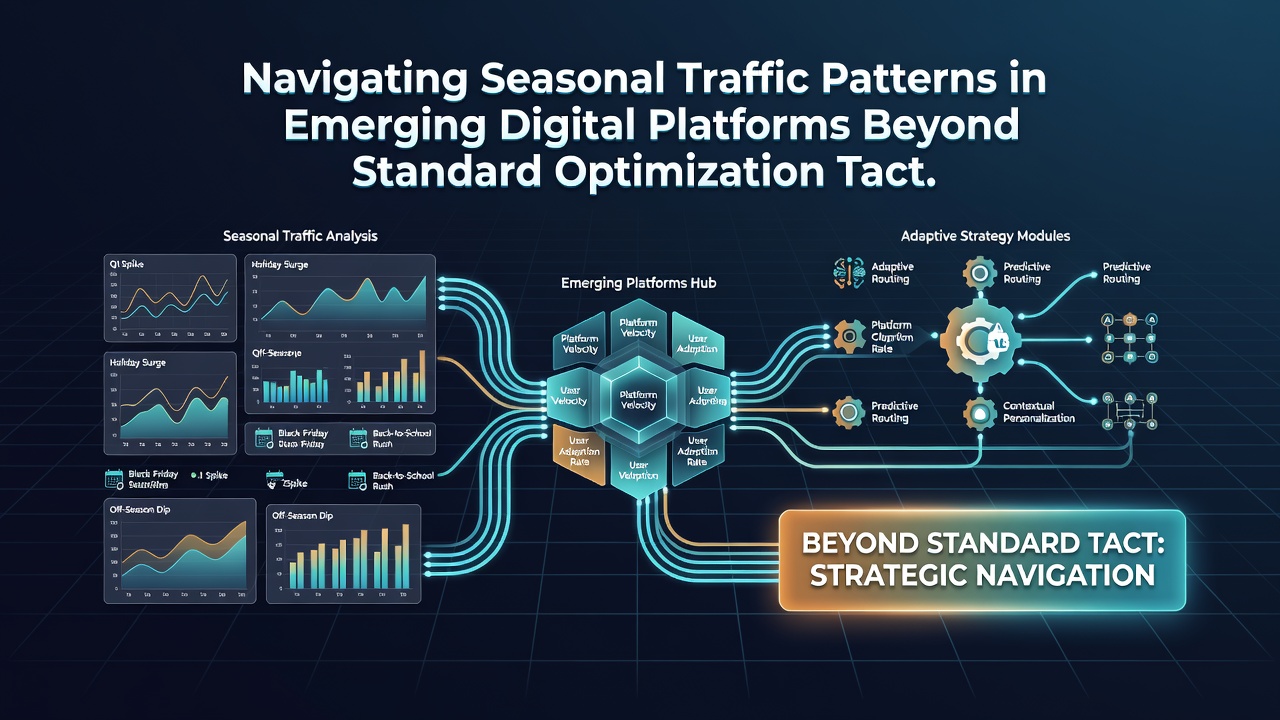
Those who have examined platform logs report that incorporating predictive modeling based on historical event data improves retention rates during shoulder seasons, and examples include platforms that pre-load localized content ahead of regional holidays in Australia and Canada where timing differs from North American markets, resulting in steadier growth curves rather than abrupt peaks followed by sharp drops.
Implementation Examples Across Regions
One documented case involved an AR-enabled learning platform that aligned its seasonal modules with academic calendars in both the United States and the European Union, producing traffic increases tracked through internal dashboards that exceeded baseline projections by integrating user-generated challenges tied to specific dates, and this approach differed from pure optimization by emphasizing participatory features that encouraged repeated visits.
Another instance tracked by industry observers showed a decentralized marketplace adjusting its reward structures in advance of September 2026 product cycles, which allowed sellers to prepare inventory listings that matched anticipated demand surges, and the resulting engagement metrics demonstrated how proactive alignment with seasonal patterns outperforms reactive adjustments after traffic has already begun to shift.
Technical Adjustments for Sustained Performance
Platform operators who move beyond keyword-centric methods frequently adopt multi-layered monitoring that combines internal telemetry with external data feeds from government statistical agencies, and this practice reveals correlations between economic indicators and user spending behavior on digital platforms during specific quarters, allowing preemptive scaling of server resources and content delivery networks ahead of confirmed seasonal events.
Integration of these feeds requires careful mapping of data fields to platform metrics, yet the process yields clearer visibility into why certain months produce consistent upticks while others remain flat, and documentation from research consortia confirms that platforms employing such hybrid monitoring maintain higher average session durations across annual cycles.
Conclusion
Seasonal traffic navigation in emerging digital platforms hinges on recognizing established cyclical drivers and layering responsive mechanisms that extend past traditional search tactics, and available data from international sources demonstrates measurable benefits when operators synchronize content, community features, and technical infrastructure with these recurring patterns, particularly around periods such as September 2026 when multiple regional calendars converge.